

The Ability to Focus Drastically Improves Employee Engagement
Modern designs and open workspaces may invite collaboration, but they can also distract employees on many levels. Shares workspaces often also mean shared temperature, shared allergens, shared noise, and shared distractions.
The inability for employees to focus when needed keeps many employees from producing at their optimal level. It also impedes employees from fully engaging at work, from cognitive engagement to full advocacy.
A Gensler study found that employees who can focus at work are high-performing overall. 53% of employees reported being distracted by others when they were trying to focus. These same employees are more satisfied and see their company as more innovative.
Employers with choices around workspaces, tools, and policies have higher performing employees.
A Cornell University study (ref: Drive the Surprising Truth About What Motivates Us by Daniel H Pink) of 320 small businesses found that employers who give employees autonomy in how to do their work grew four times faster and had ⅓ the turnover of employers who used a top-down control method of management.
Control Over Workspace Temperature Impacts Performance
At the most basic level, employees value the ability to control their workspace temperature. Employees who can control their temperatures are better able to ward off sickness and have greater focus.
Open floor plans are popular but can also mean a wide variety of temperatures throughout the year. Certain areas may be warmer or colder than other office spaces and each person’s comfort level and temperature preference varies.
Employees who are consistently cold or hot will suffer from temperature distraction and won’t be as engaged or focused on their work. In some office spaces, personal heaters or fans are forbidden due to inadequate electrical work.
Instead, consider ways you can offer your employees choices over the temperatures of their personal space. That may entail some upgrades to the space, allowing employees to move around the space during the day, or providing alternative options.
Control Over Workspace Light Illuminates Engagement

Another simple aspect of employee control involves control over their workspace lighting. Something as simple as a desk light can make a big difference in an employee’s ability to focus. According to a SHRM study, comfortable light is the second most important workplace perk.
Every employee is different with various physical needs. Lighting can make the difference for employees with various vision differences. It can also make it easier to focus on a specific project when other distractions about. The type of lighting also makes a difference.
Natural light makes a huge difference in employee’s health and wellbeing. Natural light has been shown to improve health and ward off illness. It has also been shown to help with moods and increase positive feelings.
Employers can provide spaces within the office where natural light is available and allow employees access to spaces with natural light. Providing a choice of where employees work and allowing them to move around based on their current projects and needs can make a big difference.
Workspace Control Over Noise
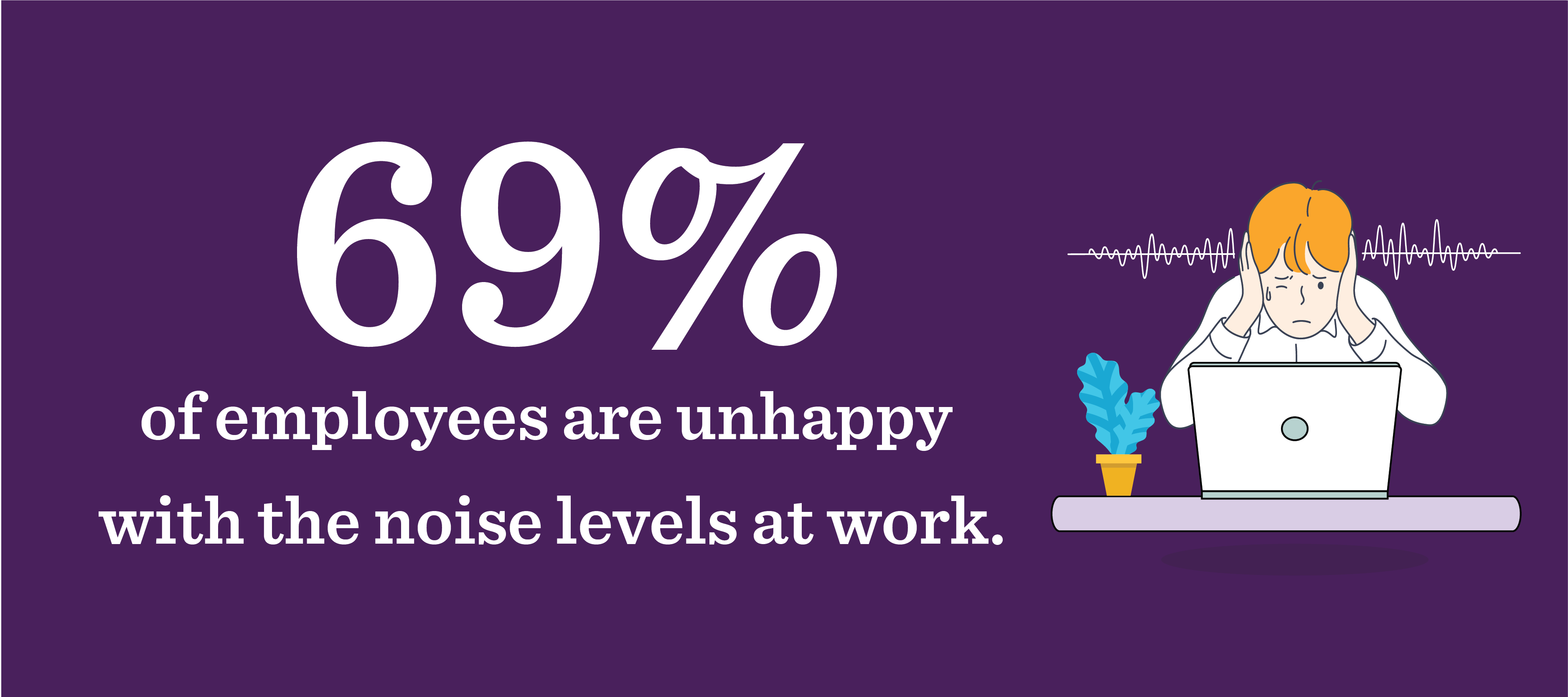
One-third of employees cite noise as a major distraction at work. Gensler found that 69% of employees are unhappy with the noise levels at work. Another study found that workers lose on average 86 minutes a day due to noise distraction.
One of the ways employers manage noise is through whitenoise, which can help to block out some of the office noise. They can also utilize sound noise absorbing materials into the decorations to reduce noise clutter.
Employers can provide more choice to employees, but it may take some creativity. In an open floor plan, small changes can make a big acoustic difference and employers can make changes without full remodels or high costs. Something as simple as placing towels behind picture frames and adding plants around the room can reduce noise echo.
Additionally, providing free offices for employees to use when concentration is needed can also make a big difference. Employees can move around the space as tasks and projects require various levels of collaboration or privacy and concentration.
Both quiet spaces and noise spaces can help with noise by allowing employees to discuss and have robust conversations in certain areas and quieter areas for concentration. Phone booths can also provide both privacy and noise control for employees.
Personalized Workspaces Have a Profound Impact on Productivity
Allowing employees to control their own workspace also allows them to customize the environment that will best motivate and inspire them. Noone wants to feel like a replaceable cog in a machine. Employees with personalized workspaces are more likely to feel a connection to place identity and connect with their employment. Acknowledging and honoring employee differences builds stronger connections between managers and employees.
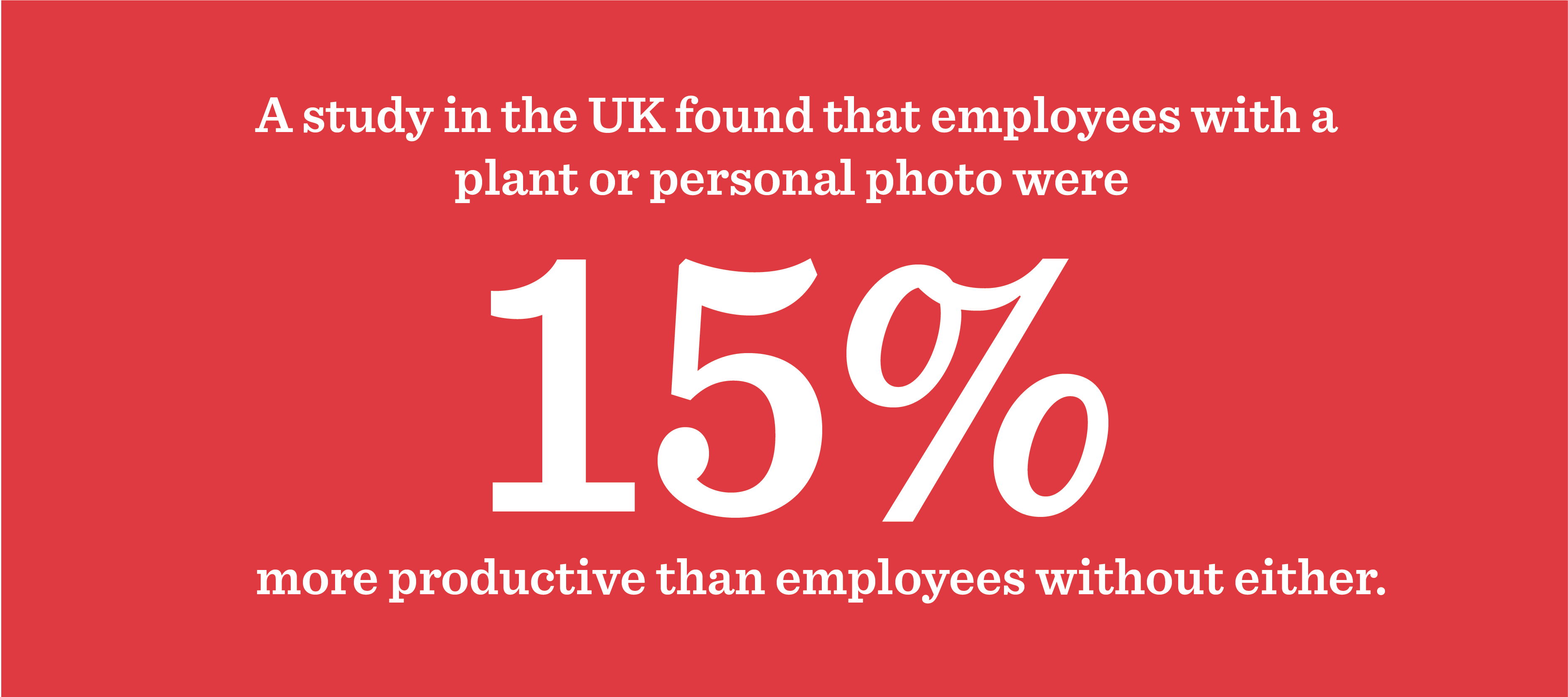
Personalized workspaces can reduce feelings of fatigue. One study in the UK found that employees with a plant or personal photo were 15% more productive than employees without either.
If you are concerned about clutter or other distractions from personalized spaces, consider collaborating with employees to solve your concerns. This will provide employees a greater say and control over fixing the issues and give ownership over the solutions back to your employees.
Find out how Thanks Polling allows you to gather information around employee preferences
Control Over Workspace Layout
Employees who can control how they work are much more engaged. Providing employees with choices regarding whether they work standing up or sitting down, in clusters or isolated, and while stationary or moving around makes a big difference.
Facebook provides mobile desks that can be moved to a circle for collaboration or moved away for greater focus while others provide various options throughout the office. Employees can also tailor the height, layout and configuration of their desks.
Allowing employees control to move and adjust how and in what format they work makes a big impact because it provides them ownership of their productivity and allows them the tools they need for greater success.
Conclusion
Workspaces vary greatly among industries, but employers can involve employees in decisions around how and where equipment is placed, the layout, and other choices. Providing as much autonomy as possible will reap rewards in both performance and the satisfaction of your employees.
About Thanks
Thanks is a leading provider of a recognition-based platform that increases communication, builds teamwork, and makes recognition a part of company culture. Fast, Easy and Simple Thanks makes it easy to bring data-driven employee recognition to your entire organization. O.C. Tanner purchased the Thanks platform in 2019 to fulfill the recognition needs of smaller businesses.
Thanks customers benefit from the same decades of research in employee motivation and company culture that O.C. Tanner enterprise clients enjoy, but in a product that is geared for fast, easy and simple deployment. Whether you’re starting a recognition program or improving and expanding on what you already have, Thanks has everything you need to engage your people with effective, scalable recognition.