
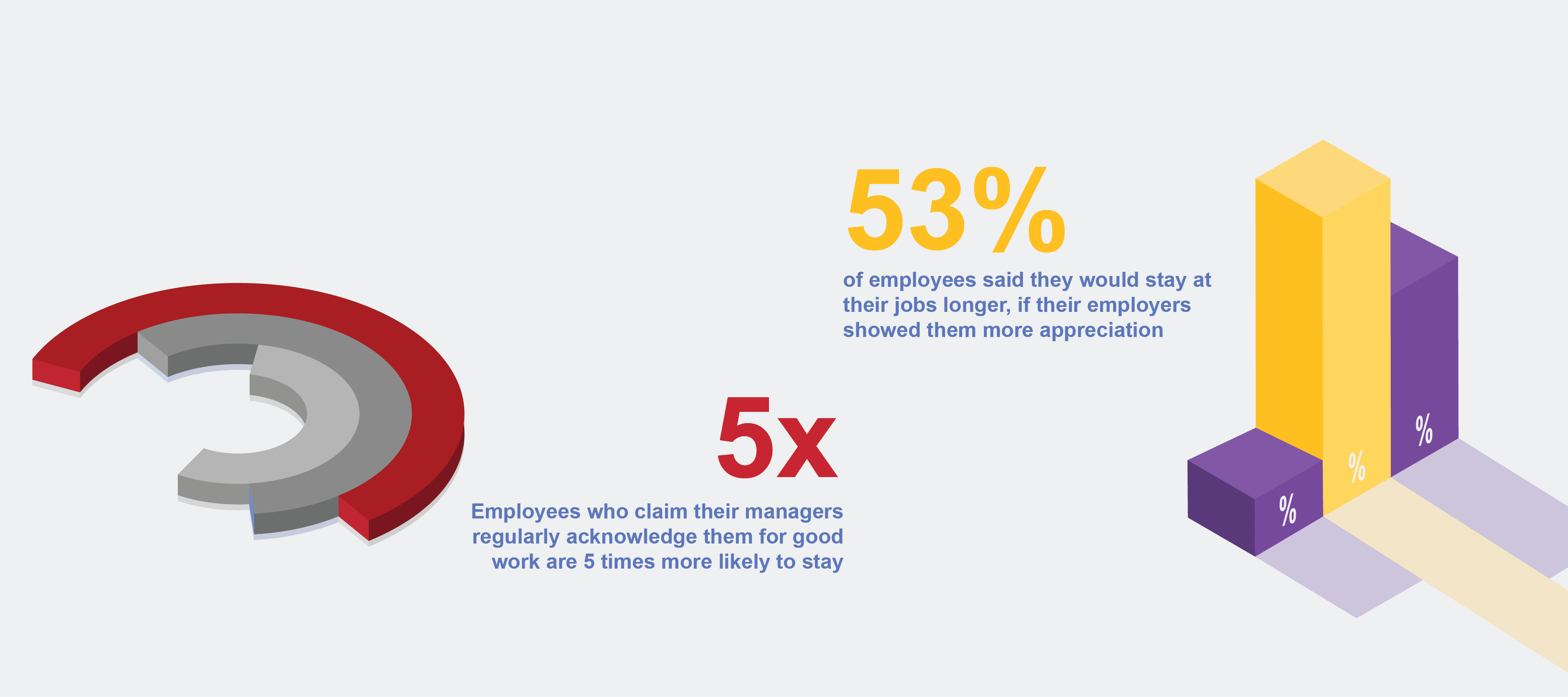
Employee recognition is important. You probably already know that employees that feel appreciated are 5 times more likely to stay. But, setting up an employee recognition program in the workplace can seem very daunting with hundreds of moving parts.
Although the Thanks Platform makes it easy and simple to recognize employees, we realize that not every company is set up with Thanks. That’s why this article will show you step by step how you can implement your own recognition program and engage employees!
The Three Parts Of Recognition
Most employers think of employee recognition as a two-part process. You give recognition and the employee receives it. But, employee recognition should also allow employees to observe greatness and participate in recognition.
Did you know?
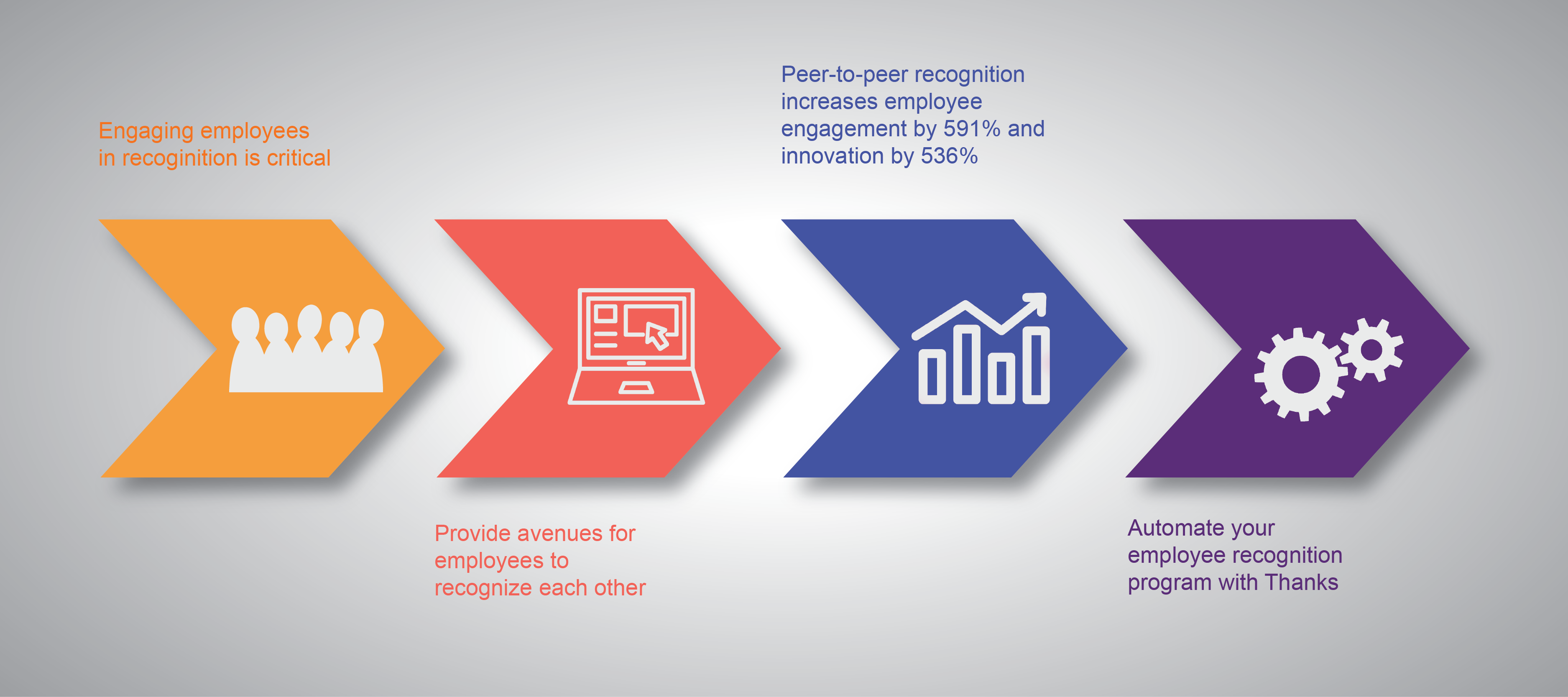
When employees engage in recognizing their peers, there is a 591% increase in employee engagement! It also increases innovation by 536%!
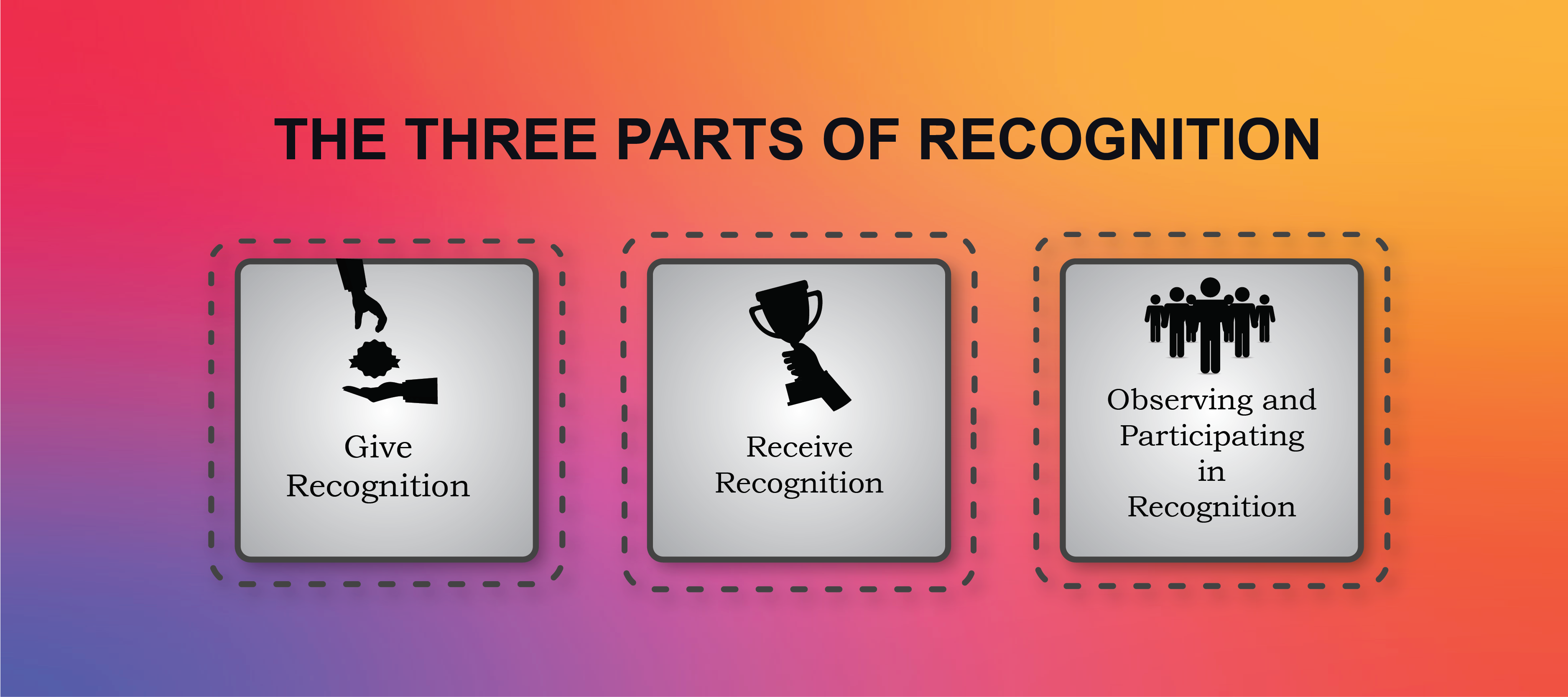
- Giving recognition
- Receiving recognition
- Observing and participating in recognition
Engaging employees, and not just management, in recognition, is critical. First, you should provide an avenue for employees to recognize each other. This can be done automatically through a program such as Thanks, or it can be done manually.
Commit To An Ongoing Recognition Program
Your recognition program should be ongoing and if you choose not to automate it, make sure that both Human Resources and the entire management team is committed to recognition. It will take a strong commitment to continue recognition during busier seasons and times of struggles.
Managers should be committed to investing time into an ongoing recognition program. This may require some education regarding the positive benefits of recognition. Discuss the various types of recognition that are available and as a management team, decide on a budget.
There are many things to consider:
- How will employees be recognized: publicly in meetings, in departments, through a company-wide email, spotlight, or another method?
- What is the budget for recognition? Will a tangible gift be awarded or will you implement an automatic recognition program. You may be surprised to learn that peer and social recognition is often more effective in producing positive results than physically awarding a “prize” to star employees.
- What type of behavior do you want to encourage? This will change by department and job function. It’s important to identify the behaviors you want other employees to emulate. It’s also important to have a wide view of employees’ roles. Keep in mind that recognizing only for top sales may encourage some of your sales team to take shortcuts when selling. Instead, you may want to recognize employees who are strong in sales, those that take the extra time to help potential customers understand the product, and those that maintain long-term relationships with their sales. This provides a more robust sales team.
- Who is involved in recognition? Will this be a manager-driven program or will peers be able to recognize each other?
- How will employees be nominated? Will you have a “nomination box” where employees can submit nominations, an email inbox for submissions, or will managers be responsible to take and submit nominations from their departments? Or, will you use a program such as Thanks, where nominations can happen seamlessly and without additional management time commitments?
- Who will decide on the employees recognized? Will every nominee be recognized or will only a few of the nominees be recognized? This is an important question in a manual program because of the time constraints of recognizing employees. If your company chooses an automatic program, it becomes much easier to socially recognize employees without additional time from managers.
Challenges To A Manual Recognition Program
Three main challenges usually rear their heads when employers choose to implement a manual recognition program:
- Consistency
- Time Requirements
- Longevity
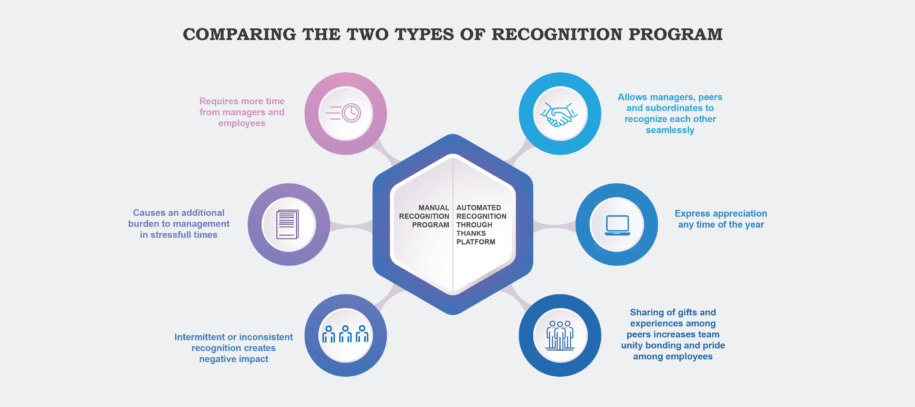
Manual recognition programs require more time from managers and HR employees. As a result, there are often many times during a set year when management is simply too busy to recognize employees.
Unfortunately, these times are often the very periods when employees are more stressed, providing their best efforts, and going the extra distance. Failing to recognize during busiest periods sends a clear, but negative message that great performance is only appreciated when it’s not a busy season.
Even when recognition isn’t forgotten, manual recognition can cause an additional burden to management teams during stressful times.
This can cause the death of a recognition program. But, having intermittent or inconsistent recognition is ineffective in creating positive benefits. And, discontinuing recognition means a waste of all the time already invested in the creation of the program.
Automate Recognition Through Thanks Platform
Ensure a successful on-going recognition program by automating recognition. The Thanks Platform allows managers, peers, and subordinates to recognize each other seamlessly. Within Thanks, your employees can express appreciation for help given, a great job provided, or transfer gift points to others.
Thanks provide a way to automate celebration. Celebrate work anniversaries, new employees, birthdays, and special events. Recognize employees who have newborns or adopted a child. Celebrate national and local holidays.
You will also be able to align recognition to company core values. This embeds core values into daily tasks, company culture, and emphasizes the company’s purpose.
Peers can share positive experiences and gifts with each other. This increases team unity, bonding, engagements, and pride among employees.
Engage new employees through onboarding recognition. Recognize employees who have completed training, those who mentored the new employee, and those who stay for 90 days, 6 months, and 1 year.
Thanks also provide a way for each manager to take control of recognition within their teams.
You can also create and share memories within teams and the entire company. Peers and teams can nominate each other and their managers. The Thanks platform provides regular recognition events such as a quarterly, semi-annual, and annual spotlight of your top performers. You can also designate different levels of recognition and allow for daily recognition among peers.
Lastly, employees can share the recognition they receive at work with their friends and family on social media. This enhances family support of the workplace and increases employee job satisfaction.
In a nutshell, these are a few of the benefits that the Thanks platform automates and provides:
- Reinforces company core values
- Automates celebrations of employee milestones, special events, and anniversaries
- Shows employees that their employer wishes them well and enhances company branding
- Peer to peer recognition
- Builds bonding and increase engagement
- Recognize new employees and increase retention
- Give control to managers
- Create memories and share experiences
- Combine daily, instant recognition with larger quarterly, semi-annual, and annual events
- Provide social recognition by allowing employees to share recognition on social media
- Integrates seamlessly with Microsoft Outlook, Teams, and Workplace
About Thanks
Thanks is a leading provider of a recognition-based platform that increases communication, builds teamwork, and makes recognition a part of company culture. Fast, easy and simple Thanks makes it easy to bring data-driven employee recognition to your entire organization. O.C. Tanner purchased the Thanks platform in 2019 to fulfill the recognition needs of smaller businesses.
Thanks customers benefit from the same decades of research in employee motivation and company culture that O.C. Tanner enterprise clients enjoy, but in a product that is geared for fast, easy and simple deployment. Whether you’re starting a recognition program or improving and expanding on what you already have, Thanks has everything you need to engage your people with effective, scalable recognition. Thanks is a subsidiary of OC Tanner.